



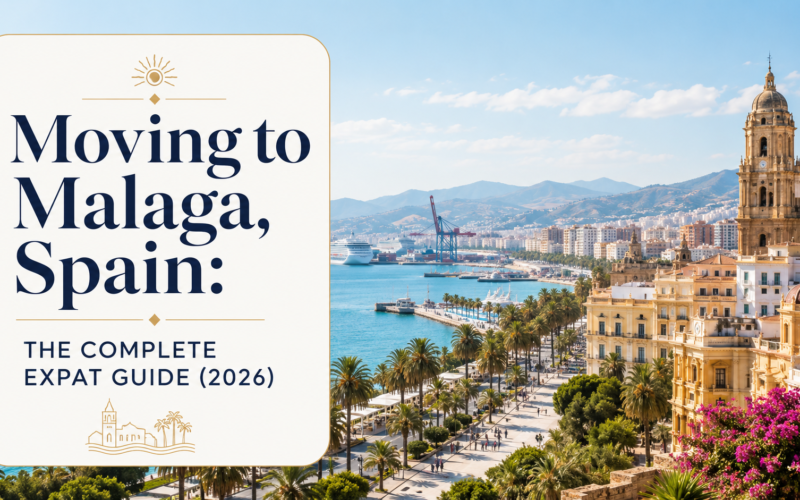
Moving to Málaga: The Complete Expat Guide (2026)
I live in Málaga. My apartment is in La Malagueta, two minutes from the beach. I have been here for several years and I have watched the city change faster than almost anywhere else I know – and not in ways that most expat guides have kept up with.
If you are researching moving to Malaga as an expat, this guide covers the city as locals write it – Málaga – but includes the practical details most relocation guides miss.
Málaga is no longer just the airport city people pass through on the way to Marbella. In 2026 it is one of Spain’s strongest expat cities in its own right: walkable, international, culturally rich, beach-accessible, served by one of Spain’s busiest airports, and increasingly shaped by remote workers, tech companies and long-term foreign residents who came for a month and stayed for years.
But Málaga is not the cheap secret it used to be. Rents have risen sharply. The historic centre is under real pressure from tourism and short-term rentals. And choosing the wrong neighbourhood can completely change your experience of the city. The guide below covers all of this – neighbourhood by neighbourhood, cost by cost, honestly.
Last updated: June 2026. Rental prices, visa rules, transport times and healthcare information change. Always verify official requirements with your consulate, lawyer or the relevant Spanish authority before making legal or financial decisions.
StartLifeInSpain verdict
Is Málaga a good place to live as an expat?
Climate and sunshine
5/5
Airport access
5/5
Culture and restaurants
5/5
Healthcare
5/5
Remote work and tech scene
5/5
Public transport
4/5
Beaches
4/5
International community
4/5
Value for money
3/5
Rental availability
2/5
Summer overcrowding
2/5
Málaga city – quick facts
Population: ~587,000 city / ~1 million metro · Airport passengers: 26.8 million in 2025 · TechPark companies: 719 / 29,000+ employees · Sunshine: 320+ days/year · Avg temperature: 18-19°C annual, 30-36°C July-August · Airport: ~12 min from city centre by train · Metro lines: 2 (Line 1 and Line 2)
📋 Quick navigation
Quick answer: is Málaga a good place to live as an expat?
Yes – particularly if city life, culture, and connectivity are your priorities. Málaga gives you direct access to one of Spain’s busiest airports, a walkable city centre, genuine beach access, major public hospitals, strong private healthcare options, and a growing professional and digital nomad community. All without needing a car in most central areas.
The honest caveats: rents have risen 30-40% in the past four years and the affordable long-term rental stock in central areas is tight. The historic centre is genuinely under pressure from tourism and short-term lettings. And August in Málaga – with temperatures regularly hitting 36-38°C and tourists filling every street – is an experience that surprises people who visit in May and think they know the city.
For the right profile, Málaga is one of the most complete expat city options in southern Spain. For people expecting a quiet coastal town at cheap Spanish prices, it will disappoint.
Málaga in 2026: not just the airport city anymore
For decades, Málaga was mainly the place people landed before driving to Marbella or Nerja. That is genuinely no longer true. The city has gone through a transformation in the past ten years that has fundamentally changed who lives here and why.
Why Málaga now attracts remote workers and professionals
The Málaga TechPark (Parque Tecnológico de Andalucía / PTA) now hosts more than 719 companies and over 29,000 employees. International tech firms have established a presence. The university runs a strong engineering and technology faculty. Coworking spaces have multiplied across Soho, Centro and Pedregalejo. The city has become one of southern Spain’s most credible digital nomad bases – not because anyone branded it that way, but because remote workers arrived and found it worked.
At the same time, the cultural infrastructure has continued to develop. The Picasso Museum, the Pompidou Centre Málaga, the Carmen Thyssen museum, the Contemporary Art Centre (CAC) in Soho, and a restaurant scene that now regularly appears in serious food journalism – these are genuine quality-of-life assets, not tourist marketing.
Airport passengers
26.8M
In 2025 – one of Spain’s busiest
TechPark companies
719
With 29,000+ employees on site
TechPark revenue
~€4.9B
Annual revenue reported in 2025
Málaga vs other expat destinations
How Málaga compares for expat living
| Factor | Málaga | Marbella | Benalmádena | Valencia |
|---|---|---|---|---|
| Best for | City + beach + tech | Luxury/families | Practical coastal | Big-city expats |
| Monthly rent, 2-bed | €1,100-€2,000 | €1,400-€2,200 | €850-€1,400 | €900-€1,500 |
| Airport access | 12 min by train | 45 min by car | 20-34 min by train | 20 min by metro |
| Car needed | No (central areas) | Yes (most areas) | No / partly | No |
| Beaches | ★★★★ | ★★★★★ | ★★★★ | ★★★ |
| Digital nomad scene | ★★★★★ | ★★★ | ★★★ | ★★★★★ |
| Local culture | ★★★★★ | ★★ | ★★★ | ★★★★★ |
| Int’l schools | ★★★★ | ★★★★★ | ★★★ | ★★★★ |
| Summer tourism pressure | High | Very high | Medium | Medium |
For a lower-cost coastal alternative with excellent train access to Málaga, read our Benalmádena expat guide. For the luxury lifestyle option further west, read our Marbella expat guide.
Who Málaga is best for – and who should look elsewhere
Málaga is best for
- Digital nomads and remote workers – the airport train, coworking infrastructure, international community, and Mediterranean lifestyle combine in a way that is hard to replicate in most of Europe at this price point.
- Singles and couples without children – city life, culture, beaches, restaurants, walkability. Málaga is a genuinely enjoyable place to live day-to-day for people whose lifestyle doesn’t require large outdoor space or school proximity.
- Culture lovers – world-class museums, a serious food scene, live music, a restored historic centre and one of the best city festivals in Andalucía (Semana Santa and Feria de Málaga are both extraordinary).
- Airport-dependent expats – if you fly frequently for work or family, being 12 minutes from Málaga Airport by train is a significant quality-of-life advantage. There is no equivalent in Marbella or most of the coast.
- People who don’t want a car – the city centre, Soho, La Malagueta and parts of Huelin and Teatinos are genuinely functional without one.
Who should consider alternatives
- Tight budgets – Málaga is not cheap. Central areas now cost more per square metre than a decade ago. For coastal living at lower cost, Benalmádena or Fuengirola are better options with easy train access to Málaga.
- Families wanting large houses with international schools nearby – the Marbella area (Nueva Andalucía) is more established for that combination. Málaga has international schools but the city’s housing stock is mostly apartments.
- Golf-focused expats – Málaga city is not a golf destination. The Marbella area has the strongest golf infrastructure on the Costa del Sol.
- People who want deep village-level local integration – Málaga’s international community is large and highly visible. It can feel like a bubble in the same way Marbella does, just a different type of bubble. For genuine immersion, smaller towns work better.
Best areas to live in Málaga for expats
Málaga’s neighbourhoods are genuinely different from each other. Choosing the right one matters more here than in almost any other city on the Costa del Sol, because the experience of living in Centro Histórico versus Pedregalejo versus Teatinos are not minor variations – they are different lifestyles.
Quick answer – best area to live in Málaga
Soho is the best all-round area for remote workers and city-life expats. Pedregalejo has the best lifestyle and beach atmosphere. El Palo offers the best value for local beach life. Huelin is the best budget option with metro access. Limonar and Cerrado de Calderón are best for higher-budget families needing space and school access.
Málaga neighbourhoods west to east
Huelin
Budget, metro, beach
€800-€1,300
Metro Line 2
Soho
Nomads, creatives, port
€1,100-€1,700
Walkable
Centro
Culture, walkable, noisy
€1,200-€2,000
No car needed
La Malagueta
Beach + city
€1,400-€2,200
Walkable
Pedregalejo
Best lifestyle, seafood
€1,200-€1,900
Bus or bike
El Palo
Local, beach, value
€950-€1,400
Bus or bike
Limonar
Upscale, family, villas
€1,500-€3,000
Car needed
West (Airport / Churriana direction) ← · · · · · → East (Nerja direction)
🏛 Centro Histórico
2-bed rent
€1,200-€2,000/mo
Car needed
No
Best for
Singles, couples, nomads
Genuinely beautiful – the Alcazaba, the Cathedral, the Picasso Museum, Calle Larios and Plaza de la Merced are all on your doorstep. Walkable to everything. The noise is real: bars, tourist groups and street life run until 3am in summer. Long-term rental supply is constrained by the volume of tourist apartments. Check carefully before signing.
Frank’s take: “The most beautiful place to live in Málaga – and the most demanding. You earn the lifestyle with the noise and the crowds. Check the street on a Friday night before committing.”
🎨 Soho / Ensanche Centro
2-bed rent
€1,100-€1,700/mo
Car needed
No
Best for
Remote workers, creatives
Málaga’s most interesting neighbourhood for remote workers right now. The CAC contemporary art centre, independent cafés, coworking spaces, and the port within walking distance. More modern than Centro, less touristy, and increasingly popular with international professionals who want city life without historic-centre noise levels.
Frank’s take: “Where I’d choose if I were relocating today without an existing apartment. Better value than Centro, much better for working, and genuinely enjoyable day-to-day.”
🌊 La Malagueta
2-bed rent
€1,400-€2,200/mo
Car needed
No
Best for
Beach + city lifestyle
Where I live. Two minutes from the city’s central beach, walking distance to Centro. The beach itself is busy in summer – not a secluded cove – but the access is real. The area has been gentrifying for a decade and the rents reflect it. Tourist pressure is high in peak months but calms significantly in winter.
Frank’s take: “I chose La Malagueta because the beach-to-city combination is genuine. That said, August is genuinely intense – the promenade becomes a tourist corridor and the beach is crowded. Winter more than compensates.”
🐟 Pedregalejo
2-bed rent
€1,200-€1,900/mo
Car needed
Bus or bike
Best for
Lifestyle expats, families
Consistently the most recommended area for long-term expat living in Málaga. A former fishing village now absorbed into the city – it has retained the character of both. The chiringuito-lined promenade, good restaurants, a real beach and a village-within-the-city atmosphere make it genuinely exceptional. It is busier in summer but year-round residents outnumber tourists.
Frank’s take: “The best lifestyle area in the city. The pescaito frito in Pedregalejo is the best in Málaga. It is also where I take friends when I want to show them why I live here.”
🏪 El Palo
2-bed rent
€950-€1,400/mo
Car needed
Bus or bike
Best for
Local beach life, families
East of Pedregalejo and significantly more local. A proper Spanish neighbourhood with a real market, local bars, and residents who have been there for generations. Beach quality is similar to Pedregalejo but rents are 15-20% lower. The trade-off is a longer commute to Centro and less international social infrastructure.
Frank’s take: “The best-value area in the eastern part of the city for people who want real beach life. If the commute to Centro doesn’t bother you, El Palo gives you more space for less money.”
🚇 Huelin / Carretera de Cádiz
2-bed rent
€800-€1,300/mo
Car needed
No (Metro L2)
Best for
Budget expats, young families
The most affordable beach-accessible area in the city. Metro Line 2 connects it to Centro. The beach here – Playa de Huelin and Misericordia – is less photogenic than Pedregalejo but fully functional and significantly less crowded in summer. A working-class area with genuine local character, undergoing gradual change but not yet gentrified to Soho levels.
Frank’s take: “People overlook Huelin because it is not romantic Málaga. But the metro access, the rents and the beach make it a very practical choice – and the local market is excellent.”
🎓 Teatinos
2-bed rent
€900-€1,400/mo
Car needed
Metro Line 1
Best for
TechPark workers, students
Modern, practical and well-connected by Metro Line 1 to Centro and to the university and TechPark corridor. Not “romantic Málaga” – it is a newer residential area with supermarkets, pharmacies and restaurants built for residents rather than tourists. The right choice for TechPark workers or families who want Metro access and don’t need to be near the beach every day.
Frank’s take: “Not for everyone but very liveable. If you’re working at the TechPark and want modern housing without a long commute, Teatinos makes a lot of sense.”
🌳 Limonar / Cerrado de Calderón
2-bed rent
€1,500-€3,000/mo
Car needed
Yes
Best for
High-budget families
East Málaga’s most prestigious residential areas – villas, larger apartments, gardens, and proximity to international schools. A car is required for daily life. Quiet, green and family-oriented. The trade-off is distance from the beach and city centre. For families who need space and international school access without Marbella prices, this is the realistic Málaga option.
Frank’s take: “Genuinely lovely for families. Not my world but the people I know who live there are consistently happy with it. The schools access makes it the logical choice for families who want Málaga city without apartment-block living.”
✈️ Churriana
2-bed rent
€750-€1,200/mo
Car needed
Yes
Best for
Airport workers, budget families
Southwest of the city, close to Málaga Airport and the TechPark. A suburban, quiet area with lower rents than anywhere else on this list – and genuinely practical if your work takes you to the airport or TechPark regularly. Not a lifestyle neighbourhood in the Pedregalejo or Soho sense, but families and airport workers find it convenient and affordable. Gardens are more common here than in the city.
Frank’s take: “Not the first place most expats would choose – but if you’re based at the TechPark or flying constantly, the proximity is worth more than people realise. Much lower rents than comparable family accommodation in the city.”
Which Málaga area suits you best?
| Your profile | Best area | Why |
|---|---|---|
| City life, no car, culture | Centro / Soho | Walkable, cultural, airport train nearby |
| Remote worker, coworking | Soho / La Malagueta | Best cafés, coworking density, connectivity |
| Beach + city combination | La Malagueta / Pedregalejo | Direct beach access + walkable |
| Best overall lifestyle | Pedregalejo | Village feel, seafood, beach, year-round community |
| Local beach life, better value | El Palo | More Spanish, 15-20% cheaper than Pedregalejo |
| Budget coastal | Huelin / Carretera de Cádiz | Most affordable, Metro Line 2, beach access |
| TechPark worker / student | Teatinos | Metro Line 1, modern housing, practical |
| Family with higher budget | Limonar / Cerrado de Calderón | Space, quiet, international school access |
| Airport proximity | Churriana | Suburban, quiet, ~5 min to airport |
The main takeaway: choose your Málaga neighbourhood by lifestyle, not by postcode prestige. Centro, La Malagueta and Pedregalejo look best in photos, but Soho, Huelin and El Palo often work better for daily life and budget. Most people who move to Málaga and settle happily did not choose the most obvious neighbourhood first.
Planning a visit to Málaga before you move?
A guided tour of the city’s neighbourhoods is one of the most useful things you can do before committing to an area. GetYourGuide covers food tours, neighbourhood walks and day trips from Málaga.
How Málaga works without a car
Málaga is one of the few cities in Andalucía where car-free living is genuinely practical in the central areas. The combination of a walkable compact centre, two metro lines, the cercanías rail network and a reasonable bus system means many residents never need to own a vehicle.
🗺 Málaga transport connections – from city centre
Málaga Airport
~12 min by Cercanías
From María Zambrano / Centro Alameda
Teatinos / University
~8-10 min by Metro L1
From Atarazanas / Centro
Huelin / West
~6 min by Metro L2
From El Perchel / Palacio Deportes
Pedregalejo / El Palo
~15-25 min by bus
EMT lines 11, 34 eastbound
Benalmádena / Fuengirola
~20-35 min by Cercanías
C1 line from María Zambrano
Marbella
~50-60 min by bus
AVANZA from bus station
The key limitations: Pedregalejo, El Palo, Limonar and the eastern residential areas are not on the metro and bus frequency to them is moderate. Most people in these areas use bikes, taxis or Uber for daily movement. Parking in Centro, La Malagueta and Pedregalejo is genuinely difficult and expensive – another argument for car-free living in those zones.
Nice to know – airport by train
The Cercanías train from María Zambrano station (main train station, walkable from Centro) to Málaga Airport takes approximately 12 minutes. Trains run every 20-30 minutes. The fare is zone-based – check current Renfe Cercanías Málaga fares before travel. There is an underground station directly inside the terminal building. For expats who fly often, this is one of Málaga’s biggest practical advantages.
Cost of living in Málaga for expats (2026)
Málaga is more expensive than most expats expect and significantly more expensive than it was five years ago. The city is not Valencia or Seville for value. But it remains materially cheaper than Barcelona or Madrid – and dramatically cheaper than London, Copenhagen or Amsterdam.
| Monthly expense | Budget expat | Comfortable expat | City professional |
|---|---|---|---|
| Rent (couple, 2-bed) | €900-€1,200 | €1,300-€1,900 | €2,000-€3,000+ |
| Utilities + internet | €140-€200 | €200-€300 | €300-€450 |
| Groceries | €320-€450 | €500-€700 | €700-€1,000 |
| Dining out | €200-€350 | €500-€900 | €900-€1,500 |
| Transport | €40-€80 (metro pass) | €100-€250 | €250-€500 |
| Health insurance | €70-€130 | €130-€220 | €220-€400 |
| Gym + leisure | €50-€120 | €150-€350 | €350-€800 |
| Total (couple) | €1,800-€2,700 | €3,000-€4,700 | €5,000-€8,000+ |
The budget range assumes Huelin or El Palo, Mercadona for groceries, and metro pass for transport. The comfortable range covers Soho or La Malagueta with regular dining out. The city professional tier covers Pedregalejo or Centro with full private healthcare and regular restaurants at market-rate prices. For a wider Spain-wide comparison, see our cost of living in Spain guide.
Renting in Málaga: what expats need to know
The rental market in Málaga is one of the tightest in Andalucía. Short-term tourist apartments have taken a significant slice of the central supply. In the historic centre and La Malagueta, the ratio of tourist apartments to long-term rentals has shifted materially since 2019 – and the effect on long-term availability and pricing has been direct.
Finding a proper 12-month contract in a central area takes time and persistence. Properties that do come to market often go within days. Using a local estate agent who specifically handles long-term residential rentals is worth it – they know what isn’t being publicly listed.
Rental prices by neighbourhood (2026)
| Area | 1-bed/month | 2-bed/month | Best for |
|---|---|---|---|
| Centro Histórico | €900-€1,400 | €1,300-€2,000 | Culture, walkability, no car |
| Soho / Ensanche | €850-€1,300 | €1,100-€1,700 | Remote workers, creatives |
| La Malagueta | €1,000-€1,600 | €1,400-€2,200 | Beach + city lifestyle |
| Pedregalejo | €900-€1,400 | €1,200-€1,900 | Best lifestyle, seafood |
| El Palo | €750-€1,100 | €950-€1,400 | Local beach, better value |
| Huelin | €650-€1,000 | €800-€1,300 | Budget, Metro Line 2 |
| Teatinos | €700-€1,100 | €900-€1,400 | Students, TechPark workers |
| Limonar / Cerrado | €1,000-€1,800 | €1,500-€3,000 | High-budget families |
| Churriana | €550-€850 | €750-€1,200 | Airport workers, quiet families |
⚠️ Málaga rental checklist – check these before you sign
A specific Málaga issue: in older Centro buildings, check the building’s ITE (technical inspection) status. Older buildings with outstanding required works can have renovation levies (derramas) that arrive unexpectedly for buyers – and some tenant contracts are affected by building-level issues too. For renters, the main concern is lift reliability, damp in lower floors, and A/C installation in older buildings where it may not have been retrofitted.
Buying property in Málaga
The buying process: step by step
The process below covers the key stages for buying in Málaga. For a full national overview of costs, taxes and legal requirements, see our buying property in Spain guide.
Preparation
Rent for at least 6 months first
Málaga’s neighbourhoods feel very different from inside than from a visit. The noise levels in Centro, the summer crowds in La Malagueta and the commute from El Palo are only real when you live them. Do not buy on holiday impressions.
Preparation
Budget 10-12% on top for taxes and costs
ITP transfer tax in Andalucía is 7% on resale properties. Add notary, registry, and lawyer fees. A €280,000 apartment costs approximately €310,000 all-in.
Admin setup
Get your NIE and open a Spanish bank account
Both required before purchase. Get your NIE through the official cita previa appointment system – available offices depend on the procedure. Book well in advance; slots fill quickly.
⚠️ Critical – legal
Hire an independent lawyer – yours, not the agent’s
Not the developer’s lawyer. Not the agent’s recommended solicitor. In Málaga’s older buildings, ITE inspection status, tourist licence restrictions, planned community works and noise classification all need checking.
⚠️ Critical – legal
Due diligence: ITE, community fees, tourist licences
In Centro buildings: check ITE status, outstanding community works (derrama), and whether the building has tourist licence activity that affects long-term habitability. Ask for 12 months of community minutes and fee statements.
Contract
Reservation deposit and contrato de arras
Reservation typically €3,000-€6,000. Contrato de arras: 10% of price. Only sign once due diligence is fully complete. If the seller withdraws, they pay you double. If you withdraw, you lose the deposit.
Completion
Notary completion and registration
Both parties sign before a notary. Balance transfers. Keys handed over. Your lawyer registers the property and pays ITP. Allow 4-8 weeks for full Land Registry completion.
Málaga property prices by area (2026 approximation)
Centro Histórico (2-bed)€220,000-€450,000
Soho / Ensanche Centro€200,000-€380,000
La Malagueta€280,000-€550,000
Pedregalejo / El Palo€200,000-€380,000
Huelin / Teatinos€150,000-€280,000
Visas and residency for Málaga
The same national visa framework applies in Málaga as anywhere in Spain. Your nationality and reason for being in Spain determine the route – not the city.
Non-Lucrative Visa (NLV): The most common route for financially independent expats and retirees. Requires private health insurance with no deductible from an insurer authorised to operate in Spain, proof of sufficient passive income, and a clean criminal record. The income threshold is set at 400% of Spain’s IPREM for the main applicant – confirm the current figure with your specific consulate before applying, as it updates annually.
Digital Nomad Visa: Particularly relevant in Málaga given the city’s remote worker profile. Requires proof of remote working arrangement of at least three months with non-Spanish clients or employers, sufficient income (based on 200% of Spain’s SMI – check current figures with your consulate), private health insurance, and the required documentation. Gives access to the Beckham Law flat tax rate for qualifying applicants.
EU citizens: Register your residency with NIE and empadronamiento. No visa required. Full right to live and work from day one.
For more detail on each visa route, read our Non-Lucrative Visa Spain guide and Digital Nomad Visa Spain guide.
📋 Málaga residency paperwork checklist
- Valid passport – original and certified photocopies
- NIE – apply through the official cita previa system; office availability depends on the procedure type and appointment slots
- Empadronamiento – register at your local Ayuntamiento district office with rental contract or property deed
- Health insurance (NLV/DNV applicants) – Spain-compliant, no deductible, authorised insurer. Confirm requirements with your consulate before purchasing any policy.
- Proof of income or savings for the required period
- Criminal record certificate – apostilled and translated if required by your consulate
Get health insurance sorted before your move to Málaga
Health insurance is essential for the NLV and strongly recommended for all expats. For Spanish residency visas, you need a Spain-compliant policy from an authorised insurer with no deductible. SafetyWing may be useful for temporary or remote-work cover, but do not assume it automatically satisfies NLV requirements. Confirm with your consulate before purchasing any policy.
Healthcare in Málaga
Málaga is one of the strongest healthcare bases in Andalucía for expats. It has both major public university hospitals and a well-developed private sector – a combination that is not available in Marbella, Benalmádena, or most other Costa del Sol towns.
Public hospitals
Hospital Regional Universitario de Málaga is the main public hospital and a major regional reference centre for complex cases. Hospital Clínico Universitario Virgen de la Victoria is the second major public hospital, affiliated with the University of Málaga medical faculty. Both handle the full range of specialties including emergency care, oncology, cardiology and neurology. For entitled residents, these are free at the point of use.
Private hospitals and clinics
Hospital Quirónsalud Málaga is one of the most respected private hospitals in the region – full specialist coverage, English-speaking consultants in most departments, direct billing with major health insurers, and 24-hour emergency care. Vithas Málaga is the second major private hospital option, also with English-speaking staff and a broad specialist network. Dozens of private clinics and GP surgeries are distributed throughout the city.
Healthcare in Málaga – key figures
Private specialist appointment€80-€200 · within 48-72 hrs
Major public hospitals2 university hospitals (free for entitled residents)
Private health insurance (under 40)€50-€130/month
Health card (Tarjeta Sanitaria de Andalucía)Apply at your local Centro de Salud once registered
Málaga’s healthcare infrastructure is a genuine reason to choose the city over coastal alternatives. For a full comparison of health insurance plans suitable for expats in Spain, read our expat health insurance Spain guide. For understanding who qualifies for the public system, our public healthcare Spain guide explains the registration process.
Schools and family life in Málaga
Málaga’s school options are stronger than the Costa del Sol corridor (Benalmádena, Fuengirola) but generally less established than the Marbella area’s British curriculum schools. The right choice depends heavily on which neighbourhood you live in and what curriculum you need.
🎓 International and private school options in Málaga
- The British School of Málaga – British curriculum, well-established, located in the city. The primary British curriculum option within Málaga itself.
- Lycée Français International de Málaga – French curriculum for French-speaking families. One of the few French international school options in Andalucía.
- Novaschool Añoreta – Bilingual international school, east of Málaga near the coast. Popular with families in east Málaga and the Nerja direction.
- MIT School Málaga – Business-focused international education, well-regarded for older students and language programmes.
- Private Spanish schools (colegios concertados) – subsidised private schools following the Spanish curriculum with better resources than state schools. Most neighbourhoods have good options.
- State schools (colegios públicos) – Free, Spanish medium, genuinely solid quality. For children under 10, immersion works very well and is how most expat families in Málaga approach it.
The practical family advice: choose the school first, then choose the neighbourhood around it. Families in Limonar and Cerrado de Calderón are generally well-placed for several school options. Families in Teatinos have Metro access and several good state and private options nearby. Do not replicate the common mistake of choosing the prettiest apartment and then discovering the school commute is 45 minutes each way.
Working remotely from Málaga: the tech scene
Málaga’s emergence as a remote work and tech hub is not marketing – it is structural. The Parque Tecnológico de Andalucía (PTA), the university’s technology faculties, and the arrival of international companies have created a professional environment that is genuinely different from Marbella or any other city on the Costa del Sol.
The TechPark is located between Málaga city and Campanillas/Churriana. It is usually easiest by car, taxi, company shuttle or bus, but it does not currently have a direct Metro or Cercanías station. For people working at or with TechPark companies, Teatinos, Campanillas, Churriana and parts of west Málaga are the most practical residential bases. For remote workers who are not tied to the TechPark but want the ecosystem, Centro, Soho and La Malagueta give you the urban infrastructure without the suburban commute.
Coworking spaces have grown significantly. Areas with the highest density: Soho (best concentration), Centro, La Malagueta (several café-style coworking options) and Pedregalejo (smaller, lifestyle-focused). For remote workers who need a professional dedicated desk rather than a café, Soho is the practical answer.
🧑💻 Frank’s experience – working from Málaga
I run multiple web properties from Málaga – costatable.com, lifecosmo.com, startlifeinspain.com. The practical reality is that Málaga works exceptionally well for this.
Fibre broadband is reliable throughout the central areas. The time zone keeps me synced to Northern European business hours. And when I need to fly – to meet people in Copenhagen or London – I am at the airport in 12 minutes by train.
The lifestyle supports the work in a way that is hard to achieve in most European cities at this cost. That is not a small thing.
The reality of living in Málaga in 2026: tourism, rents and local frustration
This section exists because honesty about Málaga’s pressures is more useful than a brochure version of the city. And because the people who move here knowing the full picture are the ones who stay.
✅ What the tourism boom has brought
- Better restaurants, bars and cultural venues than a decade ago
- Strong flight connections that benefit residents too
- Infrastructure investment in the historic centre
- A more internationally minded city with genuine cosmopolitan energy
⚠️ What it has created for residents
- Rents up 30-40% in four years in central areas
- Long-term rental supply squeezed by tourist apartments
- Restaurant prices in tourist zones not “cheap Spain” anymore
- Centro noise and crowds in summer genuinely affect quality of life
- Local residents increasingly frustrated with the pace of change
The honest advice: as an expat moving to Málaga, you are part of the process you might be reading about. That doesn’t mean you shouldn’t move – it means you should be aware of it, act accordingly (prioritise long-term contracts over Airbnb demand, engage with local life, learn Spanish) and choose your neighbourhood with the full picture in mind.
Practically: if you want to avoid the worst of the tourism pressure, move east. Pedregalejo, El Palo and the eastern residential areas have a year-round community feel that the historic centre lacks in peak months. Soho has a better balance than Centro. Teatinos and Huelin are largely outside the tourist circuit entirely.
Málaga’s beaches explained
Málaga has beaches – but they are city beaches, not the coves and lifestyle stretches of Marbella or the pine-backed sandy stretches of Nerja. Understanding that distinction is important before you choose a neighbourhood based partly on beach access.
Pedregalejo
Best lifestyle
🍽 Chiringuitos + seafood
👥 Year-round community
💶 Higher surrounding rents
La Malagueta
Most convenient
📍 5 min from Centro
👥 Very busy in summer
💶 Expensive area
El Palo
Most local
🏘 Authentic neighbourhood
👥 More Spanish, fewer tourists
💶 Better value rents
Huelin / Misericordia
Most practical
🚇 Metro Line 2 access
👥 Local families, less crowded
💶 Lowest surrounding rents
Sacaba / Guadalmar
Quietest
🐕 Dog-friendly stretches
👥 Least crowded option
🚗 Car / bike useful
La Caleta
Best central feel
📍 Between Malagueta + Pedregalejo
👥 Smaller, less touristy
💶 Expensive surrounding area
If beach quality is the primary lifestyle driver, Pedregalejo or El Palo will satisfy. If you want the closest beach to a city-centre lifestyle, La Malagueta is the answer. If you want genuinely good beaches within easy reach but cheaper rents, the Benalmádena and Fuengirola beaches are 20-35 minutes away by Cercanías train – an easy day or evening trip.
Málaga through the seasons
Málaga climate month by month
☀️ Summer (June – September)
- 28-36°C+ in July-August – the hottest months on the Costa del Sol
- Centro and La Malagueta become genuinely tourist-saturated
- Feria de Málaga (August) – one of the best city festivals in Spain
- Restaurants raise prices; central tables require reservations
- City beaches crowded; Pedregalejo and El Palo better than La Malagueta
- Airport at its busiest – book ahead for summer travel
🧥 Winter (October – May)
- 11-21°C – genuinely mild, outdoor lunches most days
- The real city emerges – locals reclaim the centre
- Restaurants have tables and reasonable prices again
- Semana Santa (Holy Week) – unmissable if you’re here
- Beaches quieter and calmer – winter sea swims are very much a thing
- Most long-term residents consider winter the best time to live here
August in Málaga is a genuine test. I have been here for several summers. The heat is real – 36°C is not unusual – the tourist density in the centre is at its maximum, and the city operates at a different rhythm from the rest of the year. It is worth experiencing once before deciding this is where you want to live. Most people who have done a January-and-August check before committing are very glad they did.
8 common mistakes expats make when moving to Málaga
Renting in Centro without checking night noise
The historic centre is beautiful at noon and very loud at 2am in summer. Bar noise, tourist groups and street activity run late. It is a different experience from visiting.
Fix: visit the specific street on a Friday evening in summer before signing. Ask neighbours, not the landlord.
Assuming Málaga is still cheap Spain
Central rents have risen 30-40% since 2019. The €800/month apartment in Centro that existed five years ago does not. Arrivals with 2019-era budget expectations are in for a shock.
Fix: check current Idealista and Fotocasa listings for your target area before budgeting, not blog posts from two years ago.
Choosing La Malagueta for “beach life” without testing August
La Malagueta beach in July and August is a genuinely crowded city beach. It serves a useful purpose but it is not a lifestyle beach in the Pedregalejo sense.
Fix: visit in August and spend a morning on the beach at 11am. Then decide if it’s your scene.
Ignoring west Málaga because it’s less photogenic
Huelin and Carretera de Cádiz are dismissed because they don’t look like Instagram Málaga. They have Metro access, beach, lower rents and genuine local life.
Fix: spend a weekday morning in Huelin before writing it off. The market and the neighbourhood feel genuinely liveable.
Buying a car when you don’t need one
In Centro, Soho, La Malagueta and most of Huelin, a car is a liability. Parking is expensive and scarce. The metro, train and bus cover the meaningful connections.
Fix: live car-free for three months before buying one. Most central Málaga residents conclude they don’t need it.
Choosing a neighbourhood before a school
Families who choose the apartment first and then find the school is 40 minutes away regret it within a term. School run logistics define daily life more than most other factors.
Fix: identify the school first, then find housing within a practical distance of it.
Underestimating August heat and density
36°C in a city apartment without adequate A/C is not a holiday inconvenience – it is a genuine health and comfort problem. And the tourist density in August is the highest on the Costa del Sol.
Fix: verify working A/C in bedrooms before signing any lease. Non-negotiable for summer living in Málaga.
Drifting past the 183-day tax threshold
Many expats living in Málaga split time between two countries without having sorted their tax position. At 183 days in Spain you become a Spanish tax resident – regardless of visa type.
Fix: speak to a Spanish gestor or accountant before reaching 180 days in any calendar year.
Your step-by-step moving timeline to Málaga
Research and narrow down
- Research visa options and confirm which route you qualify for
- Spend time in at least three different Málaga neighbourhoods – not just Centro
- Contact schools now if you have children – The British School of Málaga and other options have waiting lists
- Visit in January and in August – both tell you something different about the city
- Start collecting documentation: financial statements, criminal record certificates, income proof
Apply and engage professionals
- Apply for your visa if required – allow 2-3 months for consulate processing
- Book cita previa for NIE through the official appointment system – slots fill weeks ahead
- Select and purchase health insurance (required for NLV)
- Research rentals in your target neighbourhood – Idealista, Fotocasa, local agents
- If buying: engage an independent property lawyer with Málaga city experience
Lock down the move
- Secure your rental – sign contract, verify A/C is installed, check tourist apartment density in building
- Confirm health insurance policy is active and correctly documented
- Book removal company or shipping if bringing significant possessions
- Notify your home country bank of the international move
- Confirm school enrolment and pay any required deposits
Arrival essentials
- Complete empadronamiento at your Málaga district Ayuntamiento office with rental contract
- Apply for your Tarjeta Sanitaria de Andalucía at your local Centro de Salud if you qualify for public healthcare
- Open a Spanish bank account – Sabadell, Bankinter or CaixaBank are widely used by international residents in Málaga. For a full comparison of bank options, see our banking in Spain for expats guide
- Buy a Spanish SIM card – Movistar, Orange and Vodafone all have city-centre shops
- Get a metro monthly pass if you plan to use Lines 1 or 2 regularly
- Register children at school
Settle in and review
- Review your tax position with a gestor or Spanish accountant before reaching the 183-day mark
- Explore neighbouring areas before committing to your neighbourhood long-term – Pedregalejo and El Palo are worth spending time in even if you started elsewhere
- Connect with the international community – it is large in Málaga and easy to find
- Honestly assess whether your chosen neighbourhood works for daily life and whether it will work in August
- Begin planning long-term housing if your initial rental was a short-term or trial arrangement
Final verdict: is moving to Málaga worth it?
For the right profile – yes, strongly. Málaga offers a combination that is genuinely rare in Europe: a real city with genuine culture, a functioning beach, 320 days of sunshine, one of the best airport train connections in southern Spain, growing professional and tech infrastructure, and a genuinely international community – all without needing a car in most central areas.
The city has changed. The cheap-Spain version of Málaga that people read about in articles from five years ago no longer fully exists in the central areas. Rents are higher. Tourist pressure is real. The historic centre requires careful neighbourhood selection. These are things to factor in, not to be deterred by – but they need to be in the equation.
✅ Move to Málaga if…
- City life, culture and walkability are priorities – Málaga is the only city on the Costa del Sol that genuinely delivers all three
- You work remotely or in tech and want an international professional environment with excellent airport access
- You want beach access without sacrificing city infrastructure
- You value strong healthcare – two major public university hospitals and a strong private sector
- You’ve visited in both January and August and still want to live here
⚠️ Consider alternatives if…
- Budget is tight and the Marbella lifestyle is your goal – Benalmádena or Fuengirola give similar coastal lifestyle at 20-30% lower cost, with excellent train access to Málaga
- Golf is a primary lifestyle driver – the Marbella golf valley is the right choice
- You need the most established British curriculum schools – Marbella’s Nueva Andalucía remains better served for that specific combination
- A large house or villa with garden is the priority – Málaga is primarily an apartment city
Ready to Plan Your Move to Málaga?
Sort health insurance before you arrive – required for the NLV and strongly recommended for all expats. Compare Spain-compliant plans in our full guide before purchasing any policy.
Sources and official references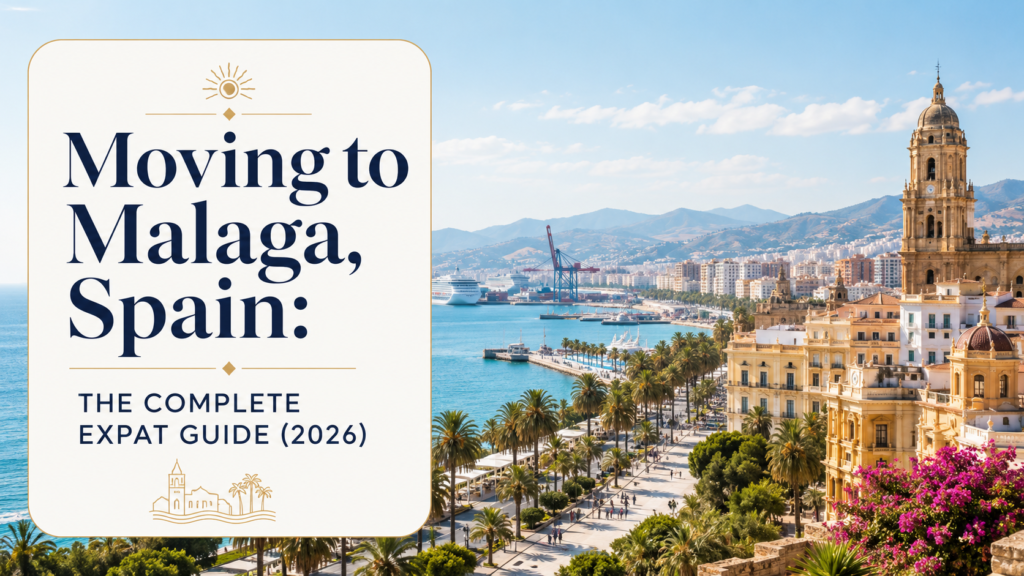
This guide covers visa rules, healthcare, property, transport and tax – topics where accuracy matters. Key sources for verification:
📚 Official sources to verify before making decisions
- Málaga Airport passenger data – aena.es – Aeropuerto Málaga. Current passenger figures and flight information.
- Málaga TechPark – pta.es. Official Parque Tecnológico de Andalucía site. Company directory and economic data.
- Cercanías Málaga train times and fares – renfe.com – Cercanías Málaga. Current timetables and zone-based fares – verify before travel.
- Non-Lucrative Visa and visa requirements – extranjeros.inclusion.gob.es and your nearest Spanish consulate. Requirements vary by consulate – always confirm before applying.
- Digital Nomad Visa / SMI income requirement – inclusion.gob.es for current SMI figures. Income threshold changes when the minimum wage changes.
- Empadronamiento in Málaga – malaga.eu (Ayuntamiento de Málaga). Municipal registration and local services.
- Hospital Quirónsalud Málaga – quironsalud.es. Private hospital services, specialists and direct billing information.
- Rental market data – idealista.com and fotocasa.es. Current listings reflect the live market. Prices in this guide reflect June 2026 market conditions.
Moving to Málaga FAQ
Is Málaga a good place to live as an expat in 2026?
Yes – particularly for digital nomads, remote workers, singles and couples who value city life, culture and connectivity. Málaga offers beach access, 320 days of sunshine, a 12-minute airport train, strong private healthcare and a growing international professional community. The caveats are real: rents have risen significantly, the long-term rental market in central areas is tight, and August tourism pressure is genuine. For the right profile, it is one of the most complete expat city options in southern Spain.
How expensive is Málaga compared to Marbella and Benalmádena?
Málaga sits between the two. Central Málaga rents (€1,100-€2,000/month for a 2-bed) are lower than equivalent Marbella properties but higher than the Benalmádena corridor. The transport cost difference is significant: in central Málaga a car is optional (saving €250-€400/month), while in most Marbella areas a car is essential. A comfortable couple’s monthly budget in Málaga runs €3,000-€4,700 – similar to Marbella’s range but with more cultural and professional infrastructure included.
Which Málaga neighbourhood is best for expats?
It depends on your profile. For remote workers and city-life expats: Soho or La Malagueta. For the best overall lifestyle: Pedregalejo. For the most local beach experience at better value: El Palo. For budget-conscious expats with Metro access: Huelin. For TechPark workers or students: Teatinos. For high-budget families: Limonar or Cerrado de Calderón. The worst mistake is choosing a neighbourhood based on aesthetic appeal without testing the noise levels, commute and summer experience.
Do I need a car to live in Málaga?
In Centro, Soho, La Malagueta and Huelin – no. The Metro, cercanías train and bus network cover the key connections. Pedregalejo and El Palo work well with a bicycle or occasional taxi. Limonar, Cerrado de Calderón and Churriana require a car. The airport is accessible by train from Centro in approximately 12 minutes – better than almost any other city in Spain for car-free airport access.
Is Málaga better for expats than Marbella?
Neither is objectively better – they serve different profiles. Málaga is better for: city life, culture, walking, tech work, airport access, and people who don’t need a car or a golf course. Marbella is better for: luxury lifestyle, the most established international schools, golf, larger residential properties, and the Golden Mile / Puerto Banús environment. Many expats who start in Marbella end up spending significant time in Málaga and vice versa. For a direct comparison, read our Marbella expat guide.
What is the best way to get from Málaga to the airport?
The cercanías train from María Zambrano station (Málaga’s main railway station, walkable from Centro) takes approximately 12 minutes to Málaga Airport Terminal. The underground station is inside the terminal building. Trains run every 20-30 minutes. Fares are zone-based and low by European standards – check current Renfe Cercanías Málaga fares before travel. Uber and Bolt are also reliable alternatives at approximately €15-20 from Centro to the airport in normal traffic.
Is Málaga good for digital nomads?
Yes – Málaga is one of the strongest digital nomad bases in southern Spain. The combination of reliable fibre broadband throughout the central areas, a growing coworking space network, the 12-minute airport train, an established international community and a walkable Mediterranean lifestyle makes it genuinely practical for location-independent workers. Soho, Centro, La Malagueta and Pedregalejo are the most useful areas for remote workers. The Digital Nomad Visa also gives qualifying applicants access to the Beckham Law flat tax rate, which is a significant financial advantage for higher earners.
What income do you need to live comfortably in Málaga?
A single expat can live reasonably in Málaga from around €1,800-€2,400/month if renting carefully outside the most expensive central areas – Huelin, El Palo or Teatinos. A couple usually needs around €3,000-€4,700/month for a comfortable lifestyle with a two-bedroom apartment in Soho or La Malagueta, private health insurance and regular dining out. For the Non-Lucrative Visa, the income requirement is approximately 400% of Spain’s IPREM for the main applicant – confirm the current figure with your specific consulate before applying, as it updates annually.

Susan Jordan is editor at StartLifeInSpain.com, where she writes practical guides about Spanish cities, relocation, lifestyle and everyday life in Spain. Based in Fuengirola on the Costa del Sol, Susan brings local insight into the region’s towns, communities and expat lifestyle. When she is not writing, she enjoys sailing, spending time on the golf courses and exploring the coastal towns of southern Spain.